Modern Miami commercial architecture—characterized by floor-to-ceiling hurricane-impact glass, polished concrete, and open-plenum ceilings—creates severe acoustic liabilities. When office-to-office sound transmission occurs, it is not merely a workplace distraction; it is a critical failure in speech privacy that exposes businesses to regulatory penalties and compromised client trust.
If your workplace suffers from low-mass demising walls and flanking noise, standard fiberglass insulation will not solve the problem. Achieving absolute speech privacy requires targeted acoustic engineering.
When Speech Privacy is a Regulatory Mandate
For high-liability sectors in Miami, preventing room-to-room sound transmission is a strict legal requirement. Failing to secure the acoustic perimeter of an office or exam room violates federal mandates.
- Medical Clinics (HIPAA Compliance): The Health Insurance Portability and Accountability Act (HIPAA) legally mandates the protection of oral patient information. To prevent speech intelligibility between adjacent exam rooms, healthcare facilities must target a minimum Sound Transmission Class (STC) rating of 50. We engineer HIPAA-compliant soundproofing for Miami clinics to ensure voices do not transmit through shared walls, HVAC ducts, or drop ceilings.
- Law Firms (Attorney-Client Privilege): Compromised speech privacy in a legal setting voids attorney-client privilege. Legal office confidentiality requires demising walls built to rigorous ASTM E90 laboratory standards and verified via ASTM E336 field testing, paired with heavy, acoustically sealed doors.
- Financial Services (GLBA Compliance): Wealth management firms handling sensitive corporate data are governed by the Gramm-Leach-Bliley Act (GLBA). Preventing cross-talk in financial offices guarantees that mergers, acquisitions, and personal financial disclosures remain secure against passive eavesdropping.
The Cross-Talk Crisis: Acoustic Failures in Miami Architecture

Sound transmission occurs when voice frequencies penetrate or bypass a structural barrier. In modern South Florida office build-outs, acoustic failures typically stem from the following design flaws:
1. The Open Plenum (Flanking Paths)
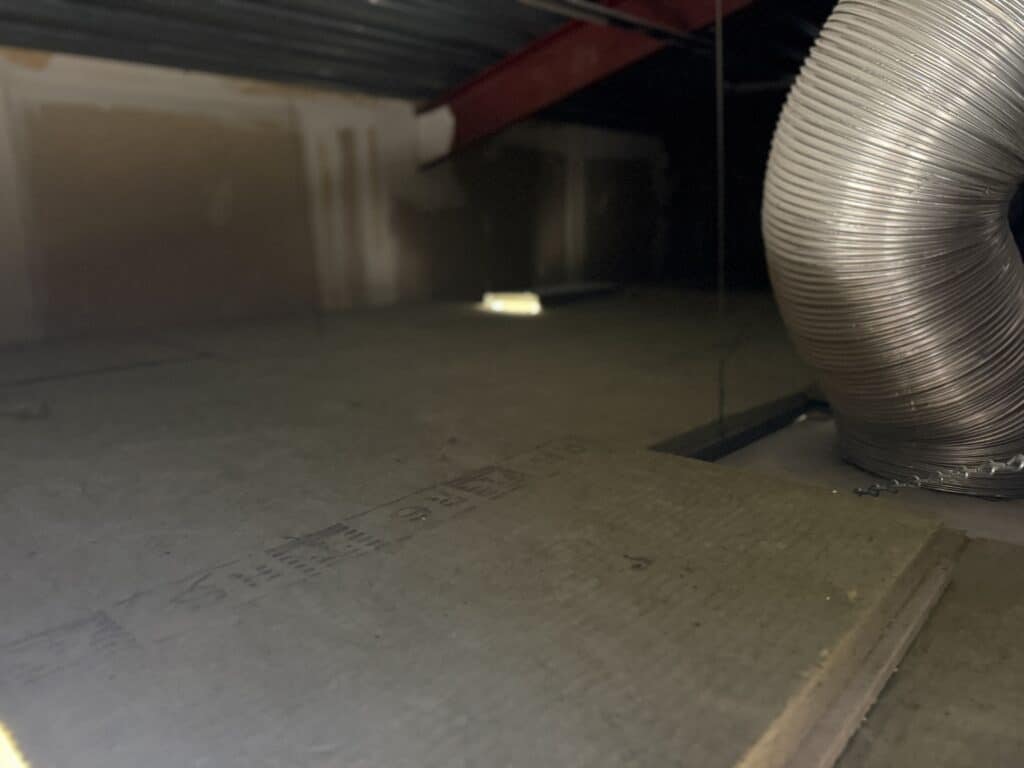
In many Miami high-rises, interior partition walls terminate at the acoustic drop ceiling rather than extending to the concrete structural deck above. The empty space above the tiles (the plenum) acts as a hollow chamber. Standard acoustic ceiling tiles possess a Ceiling Attenuation Class (CAC) of roughly 35 dB, which is grossly insufficient for the 50+ dB attenuation required for confidential speech. Sound easily travels up through the tiles or air return grill, over the partition wall, and down into the adjacent office.
2. HVAC and Air Return Cross-Talk
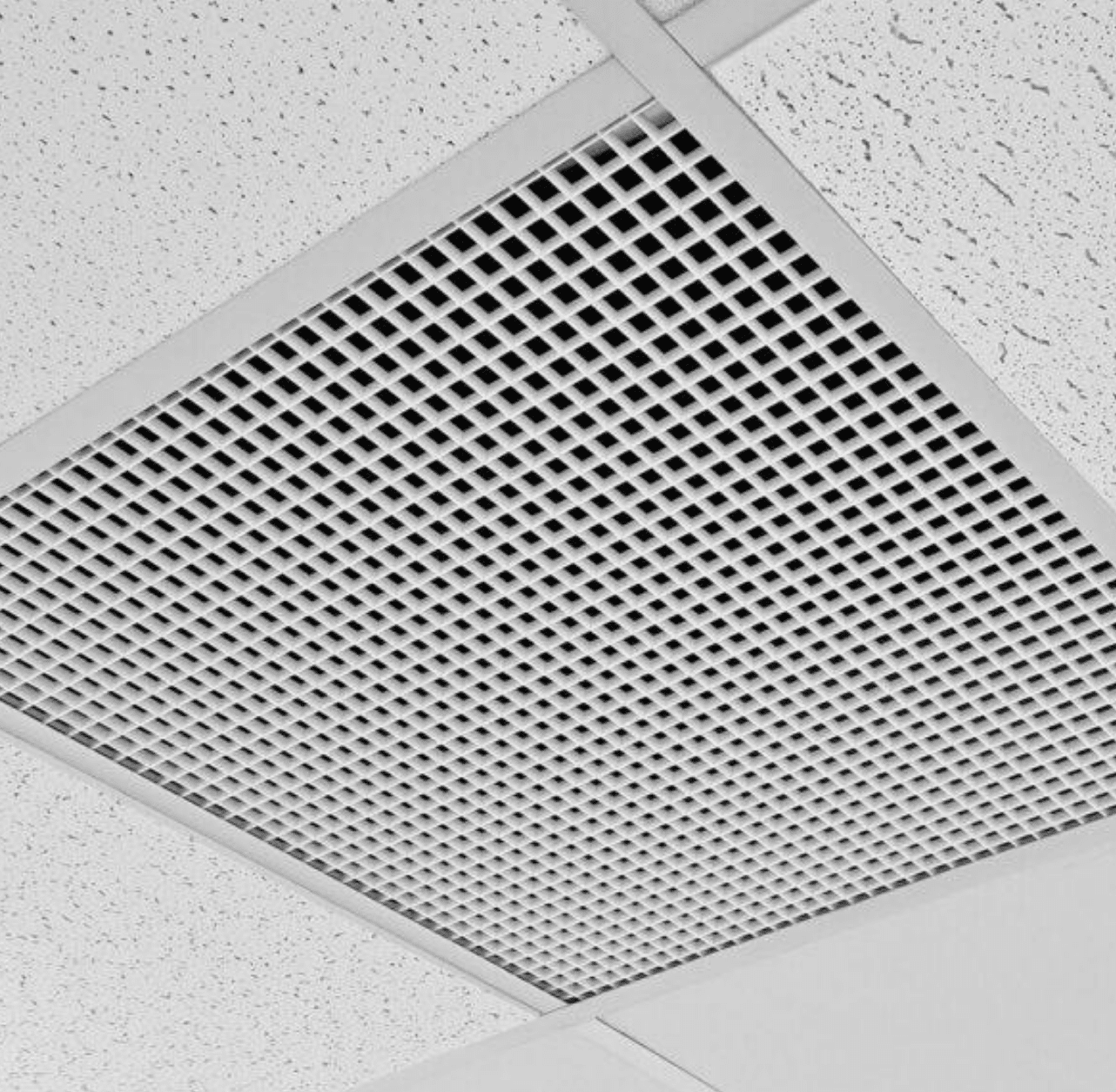
Shared ductwork and unlined (uninsulated) air return grilles act as acoustic megaphones, allowing sound waves to bypass demising walls entirely and echo directly into neighboring rooms.
3. Low-Mass Demising Walls
Standard commercial construction (single metal studs, 5/8″ drywall, and minimal fiberglass batt) provides an STC rating around 37+/-. At this level, normal conversation is clearly audible and intelligible through the wall.
4. Unsealed Electrical Penetrations
Back-to-back electrical outlet boxes in shared walls compromise the structural mass. Even a 1% gap in a wall’s surface area can degrade its overall acoustic isolation performance by up to 50%.
5. Hollow Doors and Unsealed Perimeters
Standard hollow-core office doors offer zero acoustic resistance. Furthermore, the mandatory undercut at the bottom of commercial doors allows unimpeded sound transmission along the floor.
6. Reflective Surfaces
Miami’s prevalent use of hurricane-impact glass, polished concrete floors, and exposed metal ductwork creates highly reflective environments, increasing reverberation times and amplifying ambient noise levels before transmission even occurs.
Engineered Solutions to Block Office-to-Office Noise
A legally compliant, quiet office requires a multi-layered acoustic isolation strategy focusing on decoupling, mass, and dampening.

1. Eliminating Flanking Paths
• Beefing up the CAC of the ceiling tiles to CAC 50+ with high density Quiet ceiling board snug fit onto your existing ceiling.
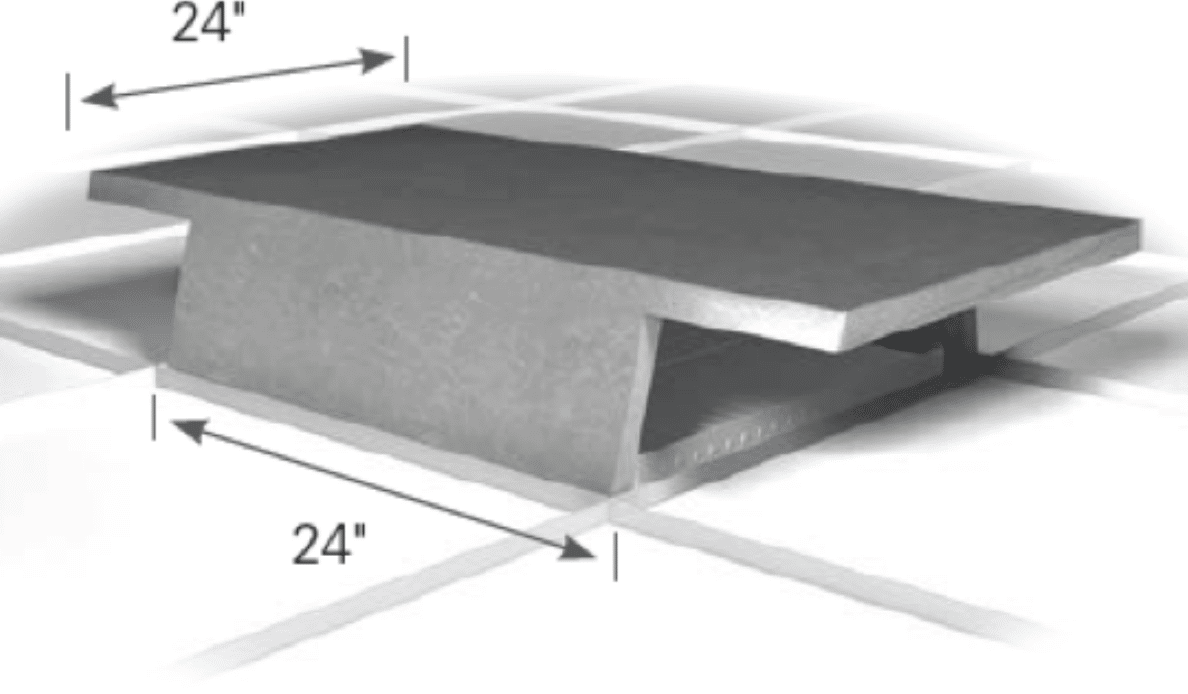
• Cross Talk Silencer: to reduce the sound exiting an office and entering in the adjacent one

• Acoustic Caulking & Putty Pads: We apply non-hardening acoustic sealants to all perimeter joints, window mullion connections, and encase electrical outlet boxes with intumescent acoustic putty to eliminate micro-flanking paths.

2. Upgrading Wall Mass and Isolation (Retrofits)
To achieve an STC rating of 50+ without demolishing existing infrastructure, we utilize engineered retrofits:
• Constrained Layer Damping: We apply a layer of Mass Loaded Vinyl (MLV) or a viscoelastic damping compound (e.g., Green Glue) followed by an additional layer of 5/8” Type X drywall or an acoustical drywall like the Quietrock. This adds vital mass and converts acoustic energy into trace amounts of heat, preventing wall vibration.

3. Securing Acoustic Weak Points (Doors & Glass)
• Acoustic Glass Partitions: For continuous glass fronts, we install acoustic laminated glass and specialized perimeter seals.
• High-STC Door Kits: We upgrade hollow-core doors to solid-core units equipped with heavy-duty perimeter acoustic seals and automatic door bottoms (drop seals) that mechanically deploy to seal the floor threshold upon closing.

4. Implementing Sound Masking Systems
To secure speech privacy, we deploy commercial sound masking systems. These systems introduce a continuous, engineered ambient sound explicitly tuned to the frequency range of human speech (250 Hz – 4,000 Hz). This reduces the signal-to-noise ratio, ensuring any faint sound transmission that bypasses physical barriers is rendered completely unintelligible.